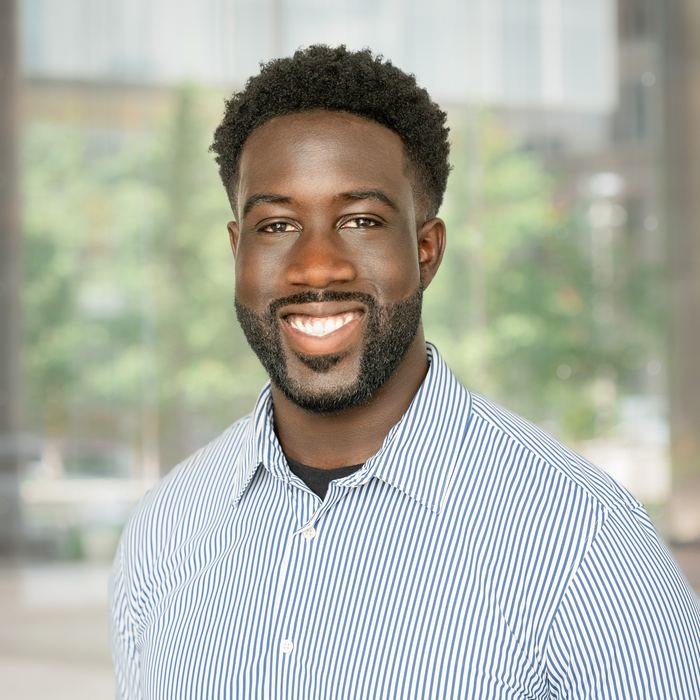
I moved back to Canada when I was thirteen. I had grown up in Saudi Arabia, and my family enrolled me in military school, so I arrived in a country I was technically from and immediately started living away from my parents. The hardest part was not the discipline. It was learning independence and responsibility a few years earlier than I had planned to.
The school ran on rank, and on paper the hierarchy was clear. In practice it taught me the opposite lesson. The students who were genuinely respected were the ones who showed up across every area, academics, athletics, and how they treated the people around them. Position could be assigned. Respect had to be earned, and leadership that leaned on the position alone was never quite the real thing.
What stayed with me was smaller than that, though. It was how much of a place goes unspoken. Every institution runs on rules nobody writes down: how you address people, what earns respect, when to speak and when to wait. If you arrive already knowing them, they are invisible. If you arrive without them, they are the only thing you can see.
I also learned what going through something difficult alongside other people does. Those are still some of the most vivid memories I have. It is why, years later, knocking on doors for a living did not frighten me.
I have been the new person many times since. I finished high school at Bronte College, then became a residence Don at the University of Toronto, where I spent three years in one of the most multicultural student communities anywhere and learned that cultural fluency is a skill you practise rather than a trait you have. In my fourth year, a course on the social determinants of health gave me the language for something I had been noticing without naming: that outcomes are shaped less by what people are told than by what their circumstances allow them to do.
Value cannot create impact until it becomes visible, understandable, and trusted.
The turn came after I graduated, in a job that did not scream prestige and had nothing to do with my degree. I joined a start-up company called Quartermaster doing field sales, and the CEO challenged us to be a start-up within a start-up. It sounded like a slogan until I had to live it. Showing up to that standard was hard, and plenty of reps never quite did. As a door-to-door sales rep you experience the entire spectrum of humanity, the old and the young, the wealthy and the struggling, the gracious and the openly rude. And no matter what, you have to be ready for whoever opens the door regardless of how you feel that morning. Some days meant eight hours and almost no conversations worth having. You learn to respond rather than react: change the street, change the neighbourhood, knock with your peer. Nobody was going to hand me a process, so we built one.
We planned with the end in mind, working backward from the goal until each sprint, three weeks in one neighbourhood before moving to the next, was something we could actually hit. Later, as a pod lead, the job was getting a whole team of reps there.
What I did not tell most people at the time was that I spent that year working on something else after hours. The capstone from my fourth-year course had turned into a research project I could not leave alone, and for about a year I was knocking on doors by day and writing about skin and hand hygiene by night. It took years to publish. I went on to an MHSc in Medical Physiology under the Temerty Faculty of Medicine, and I now work in biotech at Amgen.
Different rooms, one instinct. I look for what is true in a system and not yet legible to the people inside it, and I try to make it plain enough to act on. That is what my research does, what my training work does, and what I am doing when I speak. The question I keep asking has not changed since I was thirteen and reading a room I did not grow up in: what is going on here that nobody has said out loud yet?